Tuesday, August 3, 2010

New York City Panel Clears Way for Mosque Near Ground Zero

FOXNews.com - New York City Panel Clears Way for Mosque Near Ground Zero

A New York City panel voted unanimously Tuesday to reject landmark status for a building near the World Trade Center site, paving the way for construction of a mosque and an Islamic community center.
Opponents of the project, including 9/11 first-responders and family members of victims of the Sept. 11, 2001, terror attacks, have said the location would be insensitive.
The mosque is slated to be part of an Islamic community center to be operated by a group called the Cordoba Initiative, which says the center will be a space for moderate Muslim voices.
Several members of roughly 50 people who attended the hearing applauded the ruling, while others shouted "shame" as commission chairman Robert Tierney called for the vote. The city Landmarks Preservation Commission then proceeded to vote 9-0 against granting landmark status to the site's 152-year-old building, which can now be torn down to make way for the Islamic center.
One opponent, Linda Rivera, of Manhattan, held a sign reading, "Don't glorify murder of 3,000. No 9/11 victory mosque." 

Related Video
video
Panel set to vote on mosque plan
Supporters of the landmark status, including GOP gubernatorial candidate Rick Lazio and some Sept. 11 family members, had argued that the building warranted landmark status because it was struck by airplane debris during the attacks.
But commissioner Christopher Moore noted that the debris struck a number of buildings in the area.
"One cannot designate hundreds of building on that criteria alone," Moore said. "We do not landmark the sky."
The commission was asked to determine whether the building is architecturally important enough to preserve, not to consider the merits of the proposed mosque. Demolition and construction of the mosque can now proceed.
The move was applauded by the New York Civil Liberties Union and the American Civil Liberties Union, citing principles of religious freedom.
"We congratulate the Landmarks Preservation Commission for promoting our nation's core values and not letting bias get in the way of the rule of law," the groups said in a joint statement. "The free exercise of religion is one of America's most fundamental freedoms. For hundreds of years,our pluralism and tolerance have sustained and strengthened our nation. On 9/11, religious extremists opposed to that very pluralism killed 3,000 Americans. Those fanatics would want nothing more than for our nation to turn its back on the very ideals that make this country so great."
Oz Sultan, the program coordinator for the proposed Islamic center, said last week that the building has been changed too much over the years to qualify as a landmark.
"I think a lot of the negativity we're getting is coming from people who are politically grandstanding," Sultan said. "We're completely open and transparent."
Daisy Khan, executive director of the American Society for Muslim Advancement, told The Wall Street Journal in Tuesday's editions that the center's board will include members of other religions and explore including an interfaith chapel at the center.
"We want to repair the breach and be at the front and center to start the healing," said Khan, a partner in the building and the wife of the cleric leading the effort.
But Abraham Foxman, national director of the Anti-Defamation League, said Khan's proposals fail to address the crux of opponents' criticism that constructing the mosque near ground zero is insensitive to 9/11 victims' families.
Last week, the leading Jewish organization came out against the mosque. The ADL said "some legitimate questions have been raised" about the Cordoba Initiative's funding and possible ties with "groups whose ideologies stand in contradiction to our shared values."
Rick Bell, executive director of the New York chapter of the American Institute of Architects, said the building does not deserve landmark status.
"The nature of the current building isn't worth preserving," Bell said.
Mayor Michael Bloomberg supported the mosque's construction, but the project has drawn opposition from former U.S. House Speaker Newt Gingrich and former Alaska Gov. Sarah Palin, among others.

Neocons are hypocrites on WikiLeaks

Neocons are hypocrites on WikiLeaks| guardian.co.uk

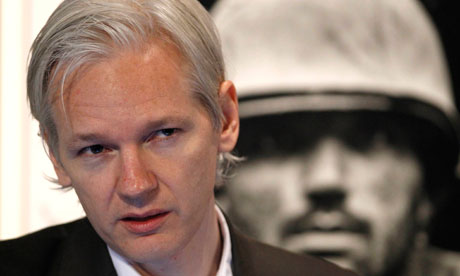
Wikileaks founder Julian Assange
Julian Assange's WikiLeaks has been called "a terrorist organisation" by Fox News. Photograph: Andrew Winning/Reuters

As soon as the WikiLeaks Afghanistan exposé came to light, it was obvious the usual suspects would start attacking the messenger than discussing the message. David Aaronovitch was quick off the mark, with others following soon enough – implying WikiLeaks was seriously damaging the war effort in Afghanistan.

The rhetoric has now reached absurd levels. The US defence secretary said the WikiLeaks founder, Julian Assange, had "blood on his hands"; people on Fox News have called it "a terrorist organisation"; and one of the Washington Post's columnists called it a "criminal enterprise". The former Bush speechwriter also said he wanted it shut down and Assange to "be brought to justice" by any means necessary, and has previously justified waterboarding. It has been reported that one WikiLeaks editor has already been harassed by US border police.

If any of this comes as a surprise, then you don't know the twisted and hypocritical minds of neoconservatives well enough. But I'll come back to that.

To be clear, I've always supported the war in Afghanistan (but not Iraq) and think the Taliban are among the most vile terrorist groups on earth.

But the case against WikiLeaks doesn't stand up to scrutiny. Has it endangered the lives of Afghanis? That's only plausible if you believe the Taliban are short of targets and without their own informants. The documents were already available to every soldier and contractor there.

You know who's endangered the lives of Afghanis already? Nato forces, which were exposed as having deliberately covered up many examples of civilian casualties. If we were discussing a cover-up of dead Britons there would be (justified) outrage. But because they're Afghanis, the military establishment can get away with trying to shift the focus back on the messenger than their own failings.

It's not only now becoming obvious to these people that reducing Afghani civilian casualties can lead to fewer attacks on US troops. Who would have thought eh?

There is obviously a bigger issue here: the mindnumbing shamelessness of the neocon movement and their hypocritical approach to domestic and foreign affairs.

On the one hand they hysterically claim that Barack Obama is subverting the American constitution, on the other they wilfully disregard its focus on freedom to practice religion by opposing the building of mosques. They want to uphold civil liberties and freedom of speech when its Muslims being told to get enlightened (Danish cartoons), but can't bear to uphold the same rights when the shoe is on the other foot (Tariq Ramadan, "hate literature", Muslim groups, banning the burqa).

The standard retort is that these people are threatening our existence, so exceptions have to be made. But not only do claims about Europe's changing demographics fail to stand up, they betray the sort of moral relativism that they always accuse their opponents of. As I've shown above, the values of enlightenment and civil liberties these numpties want the west to stand up for are thrown aside the instant their vested interests are threatened.

I don't know if it's possible to stabilise Afghanistan through the Nato forces any more. I do know that the Taliban don't want stabilisation, only complete and bloody control.

But we, the public, deserve to know the truth about what's being done in our name, and not just because we're funding these wars and it involves soldiers from our communities. It was the lack of transparency that pushed us into Iraq and destabilised Afghanistan even further.

The question now shouldn't be whether WikiLeaks has destabilised Afghanistan. It should be why these people, who pushed us into the biggest foreign policy disasters of this generation, are still paid any attention.

'WikiLeaks prove Afghan pullout damn lucky for US'

'WikiLeaks prove Afghan pullout damn lucky for US'


Monday, August 2, 2010

jrank

It's no secret what Pakistan's been doing with the Taliban

Global Rights - It's no secret what Pakistan's been doing with the Taliban


All sides know what's been going on since Afghanistan was first occupied. It's also clear that this war can't be won
David Cameron's post-WikiLeaks remarks on Pakistan helping the enemy in the Hindu Kush shouldn't be taken too seriously. The carefully orchestrated "outburst" in India was designed to please his hosts and seal a few business deals (Cameron and Cable are fagging for the British arms industry). It's all part of the schmoozing.
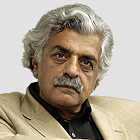
Tariq AliPakistan's official response was equally disingenuous. Since it's impossible for Islamabad to attack the organ grinder, it went for the monkey.
Meanwhile all sides know full well what the Pakistan army has been doing with various Taliban factions since Afghanistan was occupied nearly nine years ago. Three years ago a US intelligence agent was shot dead by a Pakistani soldier at such talks – as reported in the Pakistani press. A source close to the Pakistani military told me last year in Islamabad that US intelligence agents were present at recent talks between the ISI and the insurgents. No reason for anybody to be surprised. The cause, too, is clear. The war cannot be won.
It's hardly a secret that Pakistan never totally abandoned the Taliban after 9/11. How could they? It was Islamabad that had organised the Taliban's retreat from Kabul so that the US and its allies could take the country without a fight. The Pakistani generals advised their Afghan friends to bide their time.
As the war in Afghanistan deteriorated, the insurgency grew. It was the social chaos and the political corruption of Hamid Karzai's outfit that made a foreign occupation even worse in the eyes of many Afghans, bringing a new generation of Pashtuns into battle – young men who had not been part of the displaced regime. It is this neo-Taliban that has effectively organised the spread of resistance, which as the IED diagram revealed by WikiLeaks showed, extends to virtually every part of the country.
Matthew Hoh, a former marine captain serving as a political officer in Afghanistan, resigned from the service in September 2009. His explanation was clear: "The Pashtun insurgency, which is composed of multiple, seemingly infinite, local groups, is fed by what is perceived by the Pashtun people as a continued and sustained assault, going back centuries, on Pashtun land, culture, traditions and religion by internal and external enemies … I have observed that the bulk of the insurgency fights not for the white banner of the Taliban, but rather against the presence of foreign soldiers and taxes imposed by an unrepresentative government in Kabul."
In 2007, the US attempted to wean a section of the insurgents away from Mullah Omar, the Taliban leader, by offering them government positions. The neo-Taliban leaders refused to join a government while there were foreign troops in the country. But in order to make the contacts in the first place, the Pakistan army was critically important. This army, used as cover by the US on several occasions, was now forced to shed its Islamist skin (necessary for the jihad against the Soviet Union). This angered many within its ranks, and there were three attempts on General Musharraf's life.
The ISI, whose autonomy was always overrated, was brought under almost total control, and General Ashfaq Kayani (who replaced Musharraf as chief of army staff) re-organised it from top to bottom. A few rogue elements revealed themselves when they approved the attack on the Indian embassy in Kabul in 2008; they were immediately disciplined and removed. Today, attacking the ISI has become convenient for the west, who need General Kayani and so cannot attack him directly. There is no way the ISI or any other wing of the military could help the insurgents without Kayani's knowledge – and Kayani knows full well that in order to preserve contacts the insurgents fighting Nato have to be offered a few carrots.
Karzai was so desperate a few months ago to woo the Taliban that he requested General Eikenberry, the doveish US ambassador in Kabul, to remove the entire Taliban leadership, including Omar, from the most wanted list. Eikenberry did not refuse but suggested each case be considered on its merits. What better indication that the war is lost.
WikiLeaks appear to have revived Karzai temporarily. "It is a different question whether Afghanistan has the ability to tackle this," he said in response to a question about Pakistan support for the Taliban, "... but our allies have this capability. The question now is, why they are not taking action?"
But they are. And have been since Barack Obama became president. The drone attacks were intended to burn out support for the insurgents across the border. Instead, they have resulted in destabilising Pakistan. Last year, the army forcibly removed 250,000 people from the Orakzai district on the Afghan border and put them in refugee camps. Many swore revenge, and militant groups have targeted the ISI and other military centres. On 8 June this year militants bearing grenades and mortars attacked a Nato convoy in Rawalpindi. Fifty Nato vehicles were burnt and more than a dozen soldiers were reported dead.
This can only get worse. Time for Obama to abandon all pretences used to justify a war that can only lead to more deaths but no solution. An exit strategy is now desperately needed.
Taliban

Ann Jones, In Bed With the U.S. Army

Ann Jones, In Bed With the U.S. Army

As the Wikileaks document-dump week ends, perhaps the real significance of what happened lay not in the specific revelations in those 92,000 pieces of raw data from American frustration-ville in Afghanistan, 2004-2009 (much of which would have been no news to anyone reading TomDispatch all these years). It may simply be that, for the second time in a month -- the first being the McChrystal firing/Petraeus hiring -- the war that time forgot has burst onto the front pages of American newspapers and made it to the top of the TV news as a runaway story.
Given an increasingly unpopular war, the headlines spell bad news for Washington. Pakistani double-crosses, Taliban surges, Afghan corruption, the woeful state of the American-trained Afghan army and police, and -- a subject far less emphasized in U.S. than British coverage -- the unreported killing or wounding of large numbers of civilians by U.S. forces (as well as cover-ups of the same) are not what the Obama administration would have chosen for the week’s war news. The U.S. war effort was already visibly stumbling and desperately in need of continuing anonymity, so all-consuming news, including reports on spiking American and NATO deaths, certainly wasn’t on the Obama wish list. And it’s not just the public either. As reporter Jim Lobe notes, the Wikileaks story “can only add to the pessimism that has spread from the liberal wing of the Democratic Party to the heart of the foreign policy establishment, and even to a growing number of Republicans.”
The release of these documents has certainly not helped bolster NATO allies, whose citizens are ever more eager to head for the exits in Afghanistan. But in all this, one thing -- quite unnoted -- has been missing: what these events have looked like through Afghan eyes. However striking the Wikileaks revelations may have been, in one way at least they paralleled the coverage we’ve seen for years. These documents came from relatively low-level American military and intelligence officers and largely reflect the war as seen through American eyes. What they deliver -- potentially devastatingly -- is U.S. military frustration over a situation that has long been going from bad to worse. In this morass of reports, not surprisingly, Afghans play a distinctly collateral role.
Reading these documents, we remain, as is generally the case in our news reports, embedded with Americans in the field, viewing a treacherous Afghan (and Pakistani) minefield of a world. TomDispatch regular Ann Jones approaches Afghanistan and the American war effort from quite a different perspective. She’s proven a rarity in the way she’s reported back to us in these years. She arrived in Kabul in 2002, in the wake of the 9/11 attacks, to work with Afghan women on their problems. Unlike almost any other American who wrote about the experience, she embedded herself in an Afghan world.
Her moving book Kabul in Winter offered us a window into Afghan lives and worries, not American ones. Now, she’s arrived at a U.S. military base, bringing Afghan eyes with her. Among all the reporters who have embedded with the U.S. military, that may make her unique -- so prepare yourself for a look at the American way of war on the ground that won’t be like anything you’ve read. By the way, in Jones’s new book, War Is Not Over When It’s Over (to be published in September), she embeds herself with women who have suffered through trauma and nightmare in other global combat zones. It’s not to be missed. Tom